Martin St. Louis and a Masterclass in Psychological Safety
The coaching move that paved the way for Kirby Dach's resilience

Tuesday night in Tampa Bay, the Canadiens lost game 2 of the Stanley Cup Playoffs. Kirby Dach took an icing late in overtime causing a faceoff in the Habs’ zone. Dach couldn’t keep up with his man and Tampa scored the OT winner.
Within minutes, the city was erupting and comments online were beyond harsh. “Did we just witness Kirby Dach’s last game in a Canadiens jersey?”
Calls to bench him and get rid of him were everywhere. The harassment towards him was so intense that Dach deleted his Instagram account entirely.
Think about that for a moment. A young 25-year old professional athlete, already crushed by a mistake made in front of millions, trying to escape the weight of a city turning on him.
This is the moment where Marty St. Louis showed us what real leadership looks like.
What Martin St. Louis did next
On Wednesday morning, Coach Marty St. Louis called an extra media availability, stood in front of the cameras, and publicly defended his player.
He spoke about Dach’s progression and expressed genuine confidence in him. And then he called on the city and said: we need everyone pulling in the same direction if we want to reach this goal.
"We need all hands on deck, fans included. We're not perfect. Guys are gonna make mistakes. But I can tell you we have good intentions out there. Let's stick together."
That wasn’t just media management. That was a masterclass in psychological safety.
Why this matters for coaches
Psychological safety is the belief that you won’t be punished or humiliated for speaking up, taking a risk, or making a mistake.
In sport, it looks like this: can your athlete fully go for it, knowing one error won’t define them?
When athletes don’t feel safe, they play not to lose. They hesitate in critical moments. They protect themselves instead of competing. It’s like having one foot on the gas but the mental handbrake is on.
When athletes do feel safe, something shifts. They play freely. They take the risks the game demands. They trust they can go for it because they trust the person leading them has their back.
The line between an athlete playing with fear or playing free starts with the culture created in the room.
St. Louis has built this culture deliberately and consistently since his start with the team. When Lane Hutson first got in the lineup, he made countless mistakes. Marty put him back out on the next shift every time. It didn’t take long for Hutson to learn and become one of the most exciting young players in the league.
Earlier this season, fans grew frustrated watching Montembeault get start after start through some rough performances. But Marty was sending the same message to his entire team: you are free to go for it and figure it out. You will be given many chances. We lift each other up here.
Friday night at the Bell Centre
When Dach skated out for game 3 and appeared on the jumbotron, the Bell Centre erupted.
A city that had been tearing a player apart 72 hours earlier was now lifting him up, because their coach had shown them how.
That shift didn’t happen by accident. It happened because one leader made a deliberate choice: to stick by his player, invest in his confidence, and rally everyone toward something bigger than one overtime mistake.
If you’re a Habs fan you already know, Dach had a goal, an assist, and was a key player on the ice for the OT game winning goal. When he returned to the bench after scoring, Marty went out of his way to give him a pat on the back and exchange a few words, publicly displaying his support, and once again highlighting that this coach has his players’ back.
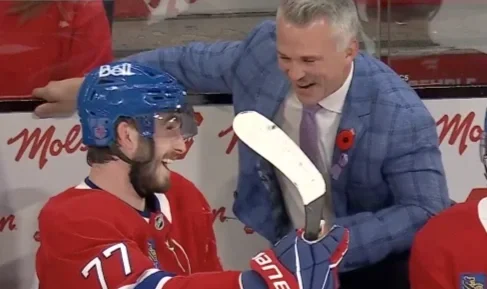
After the game, St. Louis said: "I'm not going to give up on a player unless he gives up on himself. Kirby Dach is a really good hockey player, they make mistakes sometimes at key moments. It happens to everyone. It happens to a lot of good players. For sure, he was upset but that’s not a reason to give up on a player."
In a moment of high challenge for Dach, St. Louis met him with a high degree of support and paved the way for his resilience in game 3.
The coaching lesson
Your athletes are always watching how you respond to failure, not just in the locker room, but publicly too. The message you send in hard moments becomes the culture your team lives every single day.
So ask yourself: when your athlete falls, what message does your response send?
Does it tell them one mistake could cost everything? Or does it tell them, “I’ve got you, I still believe in you, now go again”?
The answer to that question might be the most important thing you do as a coach.